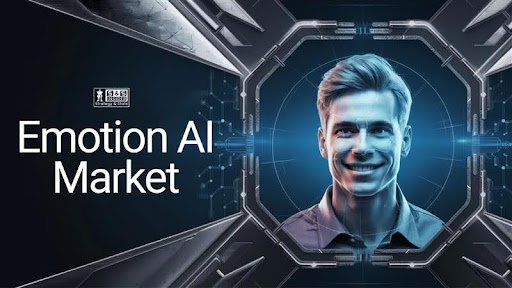
How Emotion AI Is Transforming Human–Machine Interaction
- Business
- December 5, 2025
- No Comment
In the evolving digital world, technology is no longer just about processing data — it is increasingly about understanding people. Emotion AI, also known as affective computing, represents one of the most groundbreaking technological advancements in recent years. It focuses on enabling machines to recognize, analyze, and respond to human emotions through facial expressions, voice tones, body language, and even physiological signals. As businesses and industries strive to build deeper connections with users, Emotion AI is emerging as a catalyst for intelligent engagement, empathy-driven services, and an entirely new era of human–machine interaction.
Understanding the Essence of Emotion AI
Humans communicate far more through emotions than words. Traditional AI systems excel at analyzing structured data, but they fail to grasp the subtleties of emotional context. Emotion AI bridges this gap by decoding non-verbal cues to better understand feelings such as joy, stress, anger, confusion, or excitement.
This technology uses advanced techniques including computer vision, speech analysis, natural language processing (NLP), and deep learning to interpret emotional indicators. When machines can “feel,” they become better at supporting, guiding, and serving users — whether in healthcare, automotive, retail, education, or customer experience environments.
Market Growth and Future Opportunity
The Emotion AI Market was valued at USD 2.56 billion in 2023 and will reach USD 19.44 billion by the year 2032, expanding at a CAGR of 25.4% from 2024-2032. This exponential growth reflects the rising need for emotionally intelligent systems across industries. Organizations increasingly recognize that decision-making, consumer behavior, and user engagement are deeply driven by emotion rather than rational thought alone. Therefore, the demand for technologies capable of reading emotional cues is rapidly accelerating.
The expansion is fueled by increased investments in AI-powered customer experience solutions, growing use in mental health assessment tools, and adoption within connected devices such as smart vehicles and home automation systems. Emotion AI is also finding significant relevance in workplace analytics, helping employers improve collaboration, reduce stress, and enhance employee well-being.
Additionally, as global digital transformation continues, products and services with built-in emotional intelligence will become a key differentiator for competitive growth. By 2032, Emotion AI is expected to become a foundational element of smart technologies designed to make interactions more natural, personalized, and emotionally aware.
Transforming Customer Experience and Personalization
In customer support, Emotion AI can detect frustration or confusion and adjust responses accordingly — either by escalating to a human agent or modifying tone and strategy. Retailers are deploying it to analyze shopper reactions to products and tailor recommendations in real time. Advertising platforms benefit from accurate emotional feedback rather than relying on assumptions from clicks or impressions.
This shift from generic engagement to emotional familiarity is reshaping user expectations. People desire brands that understand them, not just serve them — and Emotion AI enables exactly that.
Improving Mental Health and Emotional Well-Being
Digital mental health solutions are gaining widespread adoption, and Emotion AI enhances them by providing continuous emotional monitoring. Applications can identify early warning signs of anxiety, depression, or workplace burnout and encourage timely intervention. By making mental health support more proactive and accessible, Emotion AI functions as a digital companion capable of identifying emotional patterns that humans might overlook.
Enhancing Automotive Safety and Driver Assistance
Emotion-sensing systems in vehicles can detect fatigue, distraction, or stress in drivers and trigger safety mechanisms such as alerts, seat adjustments, or automated driving modes. As autonomous driving evolves, understanding passenger comfort and emotional responses will be essential to building trust in automation systems.
Emotion-aware vehicles represent a major step toward reducing accidents while creating a more intuitive driving environment where safety becomes proactive rather than reactive.
Empowering Education Through Emotional Awareness
Emotion AI brings personalization to learning environments by detecting student engagement levels and emotional barriers. It helps educators adapt teaching methods, identify where learners struggle emotionally, and improve overall motivation. Emotional support in learning can drive better academic outcomes and narrow achievement gaps across diverse student populations.
Ethical Considerations and Responsibility
While the benefits are transformative, Emotion AI introduces important ethical concerns. Emotions are deeply personal, and improper handling of such sensitive data could lead to privacy violations, manipulation, or biased interpretation. Ensuring transparency, consent, and culturally sensitive emotion recognition is crucial as the technology advances.
Developers, regulators, and organizations must commit to responsible innovation, ensuring that Emotion AI enhances human experiences without compromising trust or autonomy.
The Road Ahead
Emotion AI is ushering in an era where machines understand the emotional layers of human interaction. As it continues to mature, the distinction between digital and emotional intelligence will blur. The future will feature emotionally aware digital assistants, empathetic robots in caregiving, mental health monitoring embedded in daily devices, and hyper-personalized customer interactions.
Ultimately, Emotion AI is transforming human–machine relationships from transactional to emotionally responsive. By enabling technology to relate to us more like we relate to each other, it paves the way for a world where every digital experience feels more natural, intuitive, and profoundly human.