How Captive Portal Technology Is Transforming Digital Access and User Engagement
- Business
- January 7, 2026
- No Comment
Captive portal technology has quietly become a foundational layer of modern digital connectivity. Commonly experienced when users connect to public Wi-Fi networks in airports, hotels, cafés, hospitals, or corporate campuses, captive portals act as the first point of interaction between a network and its users. What was once a simple login or terms-and-conditions page has evolved into a sophisticated engagement and access-management mechanism that reflects broader changes in how organizations control connectivity, gather insights, and shape digital experiences.
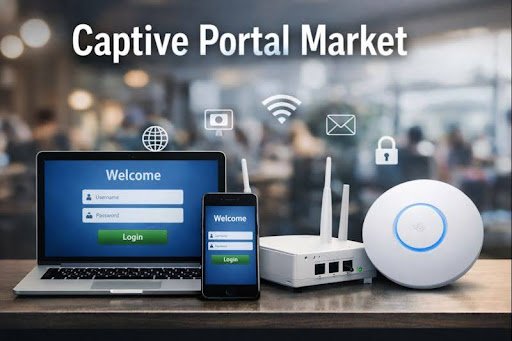
At its core, a captive portal is designed to intercept network traffic and redirect users to a designated web page before granting internet access. This process enables authentication, user acknowledgment, or compliance confirmation. However, as connectivity demands grow and digital ecosystems become more complex, captive portals are no longer limited to basic access control. They now play a strategic role in digital identity validation, policy enforcement, and user experience personalization across both public and private networks.
One of the most significant transformations driven by captive portal technology is the shift from anonymous connectivity to accountable and traceable access. In environments such as enterprises, educational institutions, and healthcare facilities, network administrators increasingly rely on captive portals to establish who is connecting, when, and under what conditions. This shift supports regulatory compliance, improves network transparency, and reduces misuse without disrupting the user journey. As cyber risks rise, this balance between accessibility and oversight has become critical.
Another important evolution is the growing emphasis on user engagement. Modern captive portals are designed to align with brand identity and communication goals rather than functioning as purely technical barriers. By serving as a digital touchpoint at the moment of connection, they allow organizations to shape first impressions, convey important information, and guide user behavior. This transformation reflects a broader trend where network infrastructure intersects with digital experience strategy.
The Captive Portal Market was valued at USD 0.93 billion in 2023 and is expected to reach USD 3.06 billion by 2032, growing at a CAGR of 14.14% from 2024-2032. This growth trajectory highlights how captive portals are becoming increasingly relevant across industries as connectivity expectations rise. Expanding public Wi-Fi availability, the growth of smart campuses, and the increasing need for controlled access in commercial spaces are all contributing factors. Organizations are recognizing that managing access points is no longer optional but a necessary component of digital infrastructure planning. The market expansion also reflects rising investments in network visibility, compliance requirements, and user data governance. As mobile devices proliferate and users expect seamless connectivity wherever they go, captive portals serve as a scalable mechanism to manage these connections efficiently. Their ability to function across diverse environments—from retail spaces and transportation hubs to corporate offices—positions them as a key enabler of structured digital access in an increasingly connected world.
Beyond access management, captive portal technology is reshaping how organizations understand network usage patterns. Each connection generates valuable contextual data, such as session duration, device type, and access frequency. When analyzed responsibly, this information helps organizations optimize network performance and align connectivity policies with real-world usage behaviors. This analytical capability marks a departure from static network models toward more adaptive and responsive digital environments.
The rise of remote work and hybrid environments has further amplified the relevance of captive portals. As users connect from multiple locations and devices, maintaining consistent access governance becomes more complex. Captive portals provide a standardized gateway that enforces policies regardless of where or how users connect. This consistency supports operational efficiency while maintaining a predictable user experience across locations.
In parallel, regulatory pressures around data protection and digital accountability continue to shape the role of captive portals. By prompting user acknowledgment and controlling access pathways, they help organizations demonstrate due diligence in managing network usage. This function is especially important in sectors where compliance and auditability are critical, reinforcing the captive portal’s role as a governance tool rather than just a technical feature.
In conclusion, captive portal technology is transforming digital access by bridging connectivity, accountability, and user engagement. Its evolution mirrors broader shifts in how organizations approach network management in an era defined by mobility, data awareness, and experience-driven design. As digital environments continue to expand, captive portals will remain a key interface where users, networks, and governance frameworks converge.