Hidden Gems of Japan: Unique Cultural Trends and Experiences You Need to Know
- Business
- June 8, 2026
- No Comment
Healthcare organizations face stringent regulations regarding the secure disposal of medical devices that store electronic Protected Health Information (ePHI). Failure to comply with regulatory standards not only exposes sensitive patient data but also risks severe legal penalties and reputational harm. The destruction of medical devices containing ePHI is a complex process requiring attention to compliance, data security, and environmental safety.
Improper disposal practices can lead to unauthorized access to confidential health records, compromising both patient privacy and organizational integrity. To mitigate these risks, healthcare providers must employ certified disposal methods and ensure comprehensive documentation for every step in the process. Regulatory compliance is about more than just technical protocols; it encompasses training, internal policies, and collaboration with certified vendors to ensure the safe, auditable destruction of all devices that may store ePHI. Maintaining vigilance across these elements is essential for effective data protection. In addition to data security, responsible disposal practices help reduce environmental harm due to hazardous components often found in electronic medical devices. When these devices are properly managed, healthcare providers demonstrate their commitment to both patient safety and global sustainability.
Why Is Secure Destruction of Medical Devices Essential?
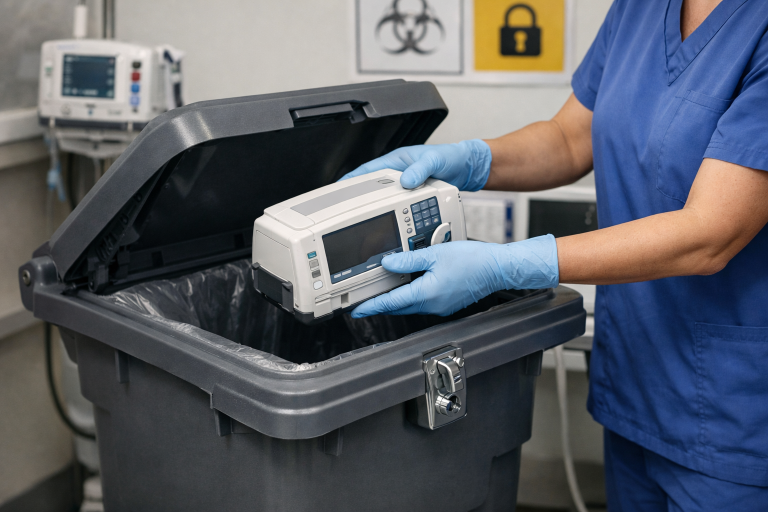
Medical devices such as infusion pumps, ECG monitors, and remote patient monitoring tools can retain sensitive ePHI on internal storage even after removal from service. The HIPAA Security Rule requires organizations to have clear policies for the secure destruction of data and devices. Any lapse in proper handling can turn outdated devices into a source of accidental disclosures or malicious misuse of patient information, a growing concern as digital health technology expands across the healthcare landscape. For a broader perspective on regulatory requirements, the U.S. Department of Health and Human Services provides valuable information on medical privacy and device management.
What Are the Risks of Improper Medical Device Disposal?
Failing to use proper disposal procedures can have severe consequences. Real-world cases show that violations often result in substantial financial penalties and the implementation of mandatory corrective action plans. Furthermore, data breaches stemming from poorly destroyed devices damage public trust, sometimes beyond repair. In many cases, healthcare providers find themselves liable for breaches that persist on devices that are supposedly wiped or “deleted,” underscoring the need for secure disposal protocols backed by industry best practices.
How Can Healthcare Organizations Ensure Compliance?
The journey toward compliance starts with inventory management and ends with auditable destruction. Healthcare organizations should:
- Track all devices and media that hold or process ePHI.
- Utilize NIST-compliant data destruction measures. These techniques may include data clearing, purging, or physical destruction, depending on the device type and sensitivity.
- Capture detailed records. Every disposal event should have supporting documentation, such as serial numbers, destruction methods, and certificates of destruction, for audit reviews.
- Conduct periodic reviews and training to ensure that protocols remain up-to-date with evolving technology and regulations.
What Are the Recommended Methods for Medical Device Destruction?
The National Institute of Standards and Technology (NIST) provides a framework for effective media sanitization:
- Clearing: Overwrites all data on the device, making retrieval by standard means nearly impossible.
- Purging: Involves more advanced steps, such as degaussing magnetic media or using device-specific commands to render storage unrecoverable.
- Physical Destruction: Shredding, crushing, or incinerating hardware to guarantee data cannot be accessed, even using specialized recovery techniques.
Each approach has unique applications and should be chosen based on device type, sensitivity of the ePHI, and organizational policy.
How Does IoMT Recycling Solutions Facilitate Secure Medical Device Disposal?
IoMT Recycling Solutions specializes in HIPAA-compliant disposal solutions for a broad range of healthcare devices, including those integral to remote patient monitoring. Their service offerings include:
- Strict adherence to NIST 800-88 media sanitization standards, ensuring irreversible data destruction.
- End-to-end logistics that prioritize secure handling and transport of devices from client sites to disposal facilities.
- Comprehensive documentation, including certificates of destruction, to support audits and regulatory reviews.
Partnering with an accredited service like IoMT Recycling Solutions provides healthcare organizations with peace of mind and reliable legal protection concerning device end-of-life management.
What Are the Environmental Considerations in Medical Device Disposal?
Besides safeguarding patient data, environmental regulations apply to hazardous materials found in many electronic medical devices. Mercury, lead, and other toxic elements must be handled in accordance with local, state, and federal regulations to prevent contamination and ensure worker safety during destruction. Following environmentally responsible e-waste recycling protocols demonstrates a healthcare facility’s commitment to global best practices and sustainable operations.
Frequently Asked Questions
What is ePHI?
Electronic Protected Health Information (ePHI) includes all individually identifiable health data created, received, stored, or transmitted by healthcare entities in electronic form.
Why can’t we delete files from medical devices?
Standard file deletion does not permanently erase data. Often, remnants can be recovered using specialized techniques, necessitating full data sanitization to ensure data is unrecoverable.
How often should we audit our device disposal processes?
Annual or biannual audits are recommended to maintain robust compliance, identify gaps, and update practices as technology and regulations advance.
Can we recycle medical devices after data destruction?
Yes, properly destroyed and sanitized devices may be recycled in compliance with all environmental safety regulations. This not only prevents landfill waste but also reduces the environmental impact of electronic healthcare products.
What documentation is required for compliance?
Regulations call for thorough records, including device lists, destruction methods, and certificates of destruction, to demonstrate compliance and readiness for regulatory inspections or audits.
Conclusion
In conclusion, rigorous protocols for the secure destruction and disposal of medical devices are vital to maintaining HIPAA compliance, safeguarding sensitive ePHI, and promoting environmental stewardship. Following industry best practices and leveraging certified partners like IoMT Recycling Solutions ensures healthcare organizations protect both their patients and their reputation